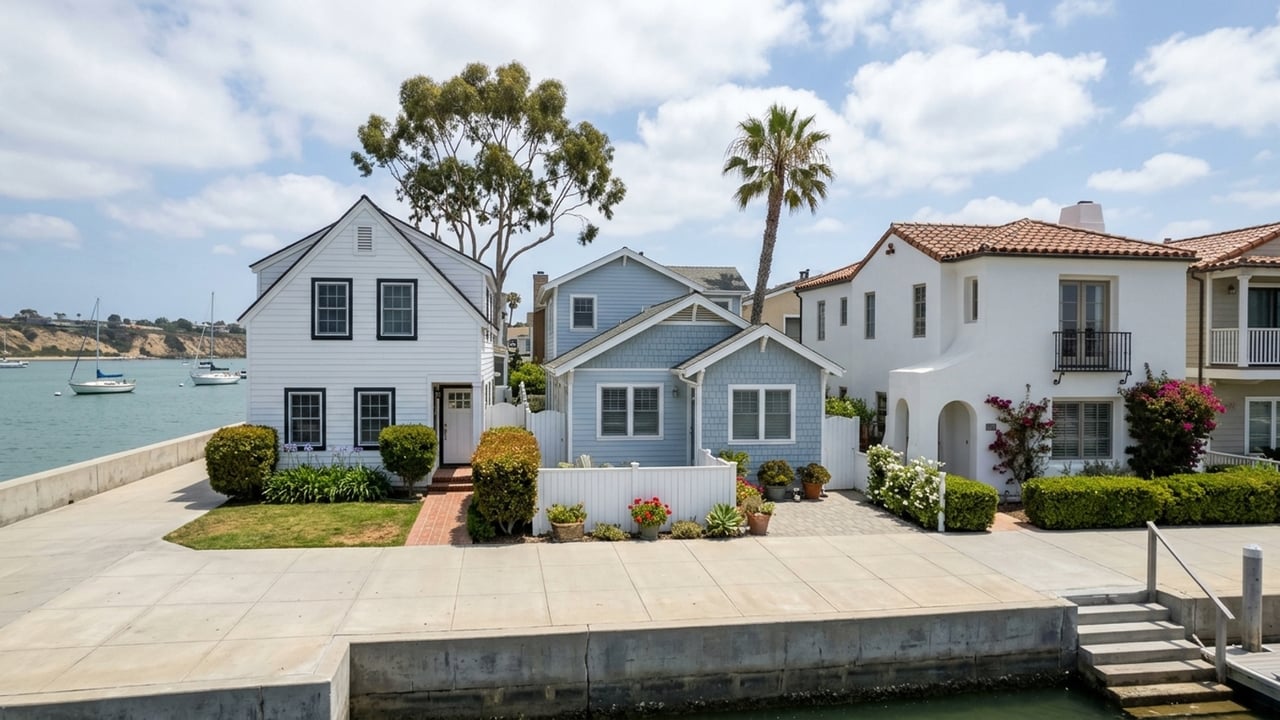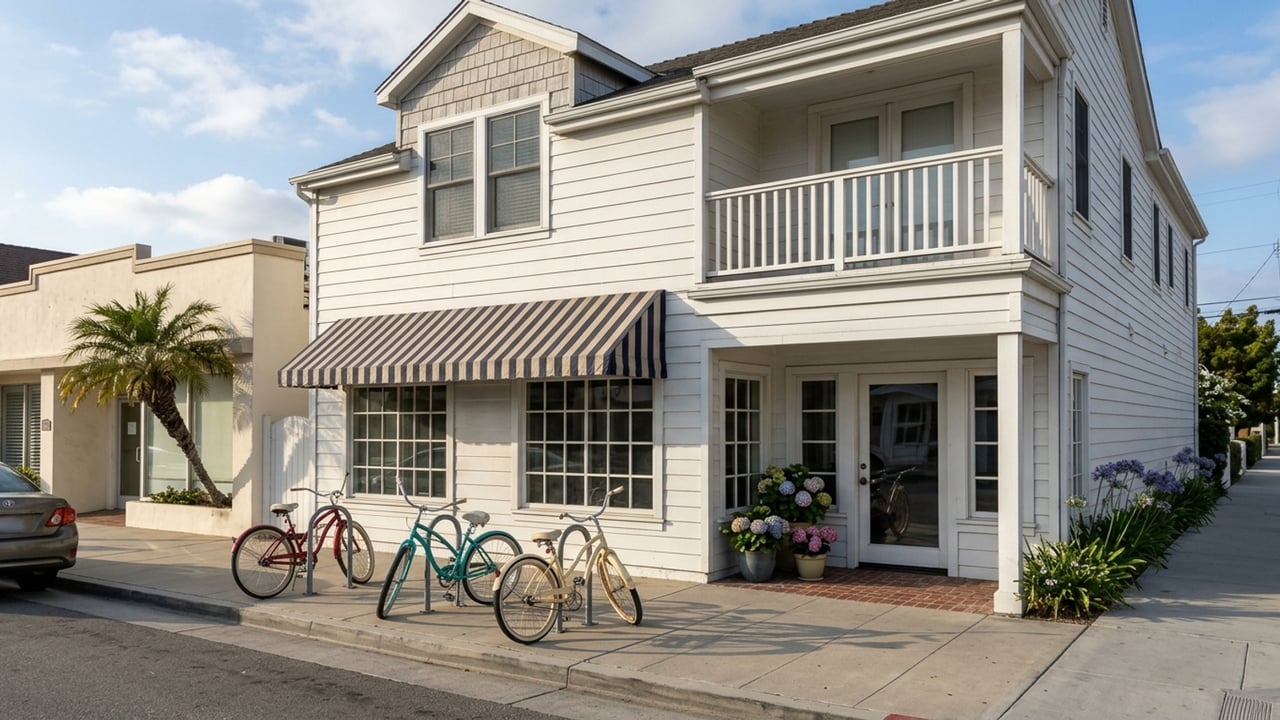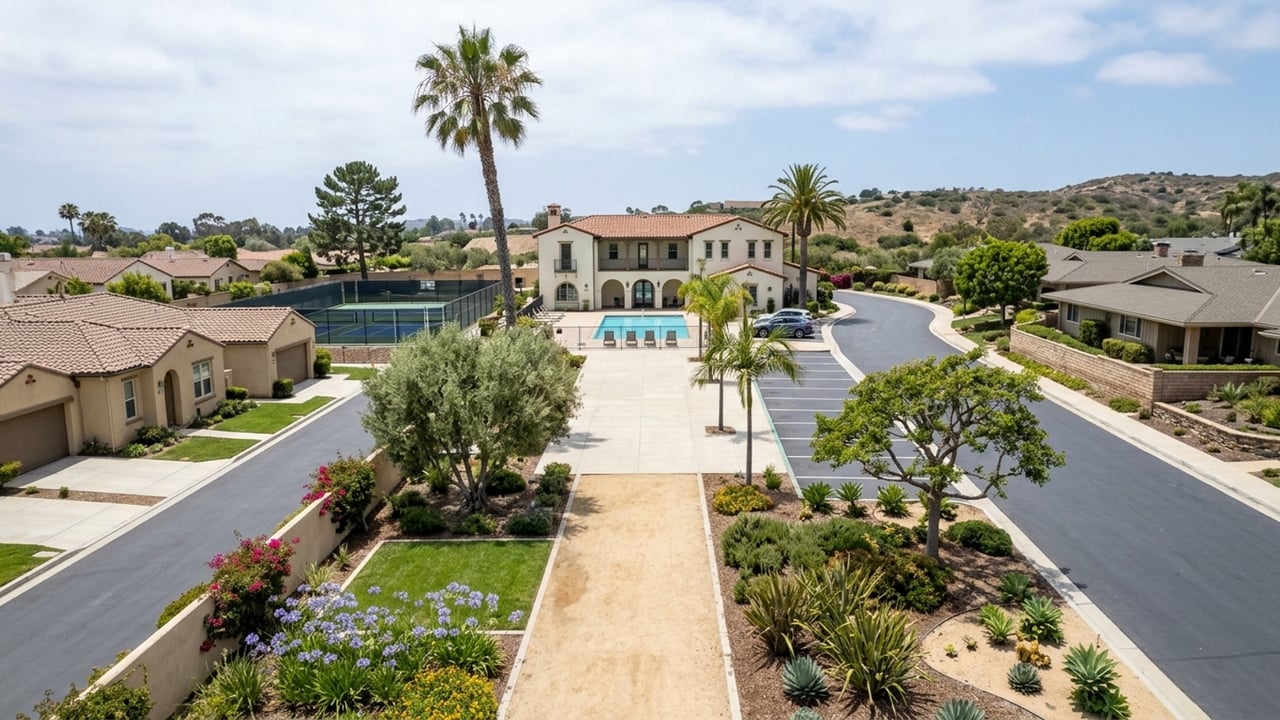
The median single-family home in Newport Beach, CA, recently sold for around $4,810,582, up 6.6% year over year for the 90 days ending September 30, 2026. For longtime homeowners, that accumulated equity shapes the next move.
A retirement move here means weighing whether to keep that wealth tied to property, free it up by downsizing, or exchange it for bundled care and services. You have options ranging from single-level condos and independent living rentals to full-service continuing care contracts.
Key takeaway
If you own a house in Newport Beach and don't need daily care yet, start by pricing a condo before touring communities. A median condo sold for about 39% of a median single-family home over the 90 days ending September 30, 2026, which frees equity you can put toward care later. If you need help with daily tasks now or want guaranteed future care, compare licensed assisted living and CCRC contracts instead.
Who this guide is for
You are planning a retirement move in or into Newport Beach and deciding between buying a smaller home, renting into a senior community, or signing a continuing-care contract.
What to compare first
In Newport Beach, a retirement community is often the second decision, not the first. Single-family homes rose year over year to a median well above $4 million, while condos slipped to just under $1.9 million for the 90 days ending September 30, 2026. A homeowner who downsizes now sells into the rising segment, buys into the flat one, and keeps roughly $2.9 million of equity at the medians to fund care later instead of converting it all into a monthly-fee community today.
That gap creates a real choice about how you want to live and pay for services. You can own a smaller home and hire help if you need it, rent into a community that bundles meals and activities, or sign a continuing care contract that covers you through higher levels of care. The right path depends on your health needs, how you want to manage your equity, and where you want to live.
How to decide which option fits
- Do you need help with bathing, medication, or meals now, or expect to within a few years? If yes, go straight to the sections on assisted living and memory care, or continuing care retirement communities (CCRCs). If no, start by looking at buying a condo instead of moving into a community.
- Do you want your housing wealth to stay as equity you can pass on or draw from, or would you rather convert it into services? Equity points to the downsizing math example below. Services point to reviewing what senior living costs in Newport Beach.
- Must you stay inside Newport Beach city limits? If not, active-adult communities cover the age-restricted ownership options in nearby cities.
- Are stairs a deal-breaker? Use the neighborhood section and HOA rules to filter for single-level floor plans and elevator buildings.
Types of senior living in and near Newport Beach
Senior living falls into two broad categories: places you buy and places you rent. Ownership options give you a deed and home equity, while rental and contract models bundle housing with daily services. Age rules apply to 55+ settings across both categories.
Each type carries different financial commitments, and understanding what each offers saves you from touring the wrong facilities.
55+ active-adult communities
Age-restricted ownership means you buy a home and get amenities, but no care services are included. California has its own senior housing rules alongside federal law. Most large age-restricted ownership communities sit in nearby cities rather than inside Newport Beach city limits.
No care is included, so a later move may still be necessary. If the closest options are outside the city, you're trading the coast for the age restriction.
Independent living communities
These are rental apartments with meals, housekeeping, activities, and transportation bundled into a monthly fee. That fee replaces your current utility bills, home maintenance costs, and some grocery expenses. What you give up is equity, and the monthly rate can rise each year. Ask each community for its current rate sheet and the last three years of increases.
Assisted living and memory care
Licensed residential care facilities for the elderly (RCFEs) provide help with daily tasks, and memory care is a secured, specialized version. The state license dictates what a building is allowed to provide. The official tool to verify this is the CDSS Community Care Licensing Division's Care Facility Search.
Care is priced in levels added on top of base rent. Ask how the assessment works and what triggers a move to a higher level.
Continuing care retirement communities (CCRCs)
A CCRC offers one contract that covers independent living now and assisted or skilled care later, usually with an entrance fee plus monthly fees. California certifies CCRC operators, and providers must obtain a Certificate of Authority from the CDSS Continuing Care Contracts Bureau in addition to an RCFE license. California law gives CCRC residents a 90-day cancellation window after moving in to back out and receive a refund.
A large entrance fee ties up capital that could have stayed as home equity. Refund terms vary sharply between contracts, so read the paperwork carefully before you sign anything.
Affordable senior apartments
These are income-restricted apartments for older renters. The City of Newport Beach's Bayview Landing development provides 120 affordable rental units for tenants aged 62 and older, with 24 units reserved for households earning up to 50% of the Area Median Income and 95 units for households earning up to 60%.
Supply is small and waitlists are common. Ask each property how long its current waitlist is.
What senior living costs in Newport Beach
Moving into a community with bundled services shifts your budget from property maintenance to care fees. These costs scale with the level of assistance you need and the contract type you choose, and comparing them against your home equity helps clarify whether a rental model or a CCRC makes financial sense.
Monthly fees for independent and assisted living
For California statewide, the median monthly cost for an assisted living community was $7,000 in 2025, according to the CareScout Cost of Care Survey. That translates to $84,000 a year, a figure worth setting against the equity freed up by a condo move. For independent living rentals, ask each property for its current rate sheet.
Survey figures are statewide medians, and coastal communities can price above them. Get written quotes that include care-level add-ons.
CCRC entrance fees
CCRCs typically offer extensive, modified, or fee-for-service contracts, often requiring an upfront entrance fee. These fees vary based on whether the plan is refundable or non-refundable. Specific fees appear in the disclosures of certified Orange County CCRCs.
A refundable plan usually costs more up front, and the refund may hinge on the unit being resold. Read the refund clause before you start comparing prices.
What Medicare and Medi-Cal cover
Medicare generally does not pay for room and board in assisted living. California offers an Assisted Living Waiver through Medi-Cal, which helps cover care costs for eligible residents in participating facilities. Waiver slots and participating facilities are limited, so most Newport Beach residents pay privately or through long-term care insurance. Confirm with the facility whether it accepts the waiver.
Buying a condo instead of moving into a community
Owning a smaller, single-level home keeps your equity invested in real estate while eliminating yard work and exterior maintenance. This path works well if you want to remain in Newport Beach and hire in-home care only when necessary.
Newport Beach condo market right now
Condo buyers currently have negotiating room. With 4.5 months of supply and 85 active listings over the 90 days ending September 30, 2026, there are more choices and more room to negotiate than a tight seller's market would allow.
That said, 85 listings city-wide isn't many once you filter for single-level units with elevators. The right unit may still take time to find.
The downsizing math
Sell a house at the single-family median and buy at the condo median of $1,894,805, and the gap is $2,915,777 before costs. From there, you subtract commission, closing costs, and capital gains above the federal exclusion. Per IRS Publication 523, qualifying taxpayers can exclude up to $250,000 of gain, or $500,000 if married filing jointly. Compare a cash offer and financing options to see what fits your situation.
At the medians, a house-to-condo move frees about $2.9 million before selling costs and taxes. The downside: the condo median rests on 58 sales in one 90-day window, and the units that suit a retirement move may price above it.
HOA dues and building rules
Condo living comes with monthly homeowner association dues, which act as the ownership equivalent of a community's monthly fee. Ask the HOA for current dues, what they cover, and the rules on pets and rentals. Check whether a building has elevator access and single-level units before you schedule a tour.
An underfunded reserve can mean a special assessment shortly after you buy. Ask for the latest reserve study and board minutes before removing contingencies.
Selling your Newport Beach house first
Funding a retirement move usually depends on the sale of your current home, and managing the timeline and tax implications of that sale determines how much equity you carry forward. Preparing your property for the market early gives you a clearer picture of your purchasing power.
Prop 19 and your property tax base
Under Proposition 19, a homeowner who is over 55 years of age may transfer the factored base year value of their principal residence to a replacement primary residence located anywhere in California. Eligible owners can transfer their tax base up to three times. This keeps your property tax bill predictable when moving to a less expensive condo.
Filing deadlines and value adjustments apply when the new home costs more than the old one. Confirm eligibility with the Orange County Assessor before you list.
How long a house takes to sell
Single-family homes took a median 65 days to sell and closed at 96.7% of list price over the 90 days ending September 30, 2026. Plan a buffer of about two months and expect roughly 3% under list when sizing the next purchase or a community deposit.
If the community or condo needs a commitment before the house closes, you may carry two homes for a stretch. Ask about bridge financing or contingent offers. Tim Smith Real Estate Group can help price your home and map out a timeline.
Where to look for a smaller home in Newport Beach
Location dictates your daily routine, especially if you plan to drive less. Some neighborhoods offer flat, walkable streets with nearby shops; others provide gated privacy further up the hills. Home layouts and proximity to errands offer the most practical way to narrow the search.
Corona del Mar
This area offers daily convenience with village shops along Coast Highway. The City of Newport Beach's senior center is in Corona del Mar, providing fitness facilities, classes, and transportation services for eligible residents.
Many older homes sit on small lots built up to two stories. Check for stairs to the main bedroom before touring.
Eastbluff
Eastbluff provides a mix of housing stock, including attached homes that appeal to downsizers. Review available floor plans carefully to see how they accommodate single-level living, because attached homes here are often two-story townhomes rather than single-level flats. Ask for the floor plan and confirm where the primary bedroom sits.
Balboa Island
Balboa Island is walkable, with a compact layout where errands can be done on foot and flat streets that make getting around without a car genuinely practical.
Narrow lots push many homes to two stories, and summer brings visitor crowds. Look the address up on FEMA's Flood Map Service Center and ask about flood insurance before you fall in love with a place.
Newport Coast
Newport Coast features a gated, master-planned setting with a layered HOA structure. It appeals to buyers who want newer construction and are comfortable driving to errands, though hillside streets make most errands a drive and master and sub-association dues can stack. Ask for both HOAs' current dues and rules.
How to check a community before you sign
If you choose the rental or CCRC path, vetting the facility is the final step. The state maintains records on licensed care providers that reveal how a building operates, and reviewing the paperwork and inspection history protects your deposit and confirms the facility can deliver what it's promising.
Check the state license and inspection record
You can look up any assisted living or memory care building in the CDSS Care Facility Search. Each facility page shows its license status, capacity, and a five-year history of licensing visits and complaints. For CCRCs, confirm the certificate of authority with the CDSS Continuing Care Contracts Bureau.
Independent-living-only buildings may not need a care license, so the state search won't list them. Ask directly what services the building is licensed to provide.
Read the contract and refund terms
Get the full residency agreement and fee schedule, and find the annual increase clause, the care-level pricing, and the move-out terms. For CCRCs, the cancellation period is 90 days from when you move in, during which you can cancel the contract and receive a refund.
Brochure prices rarely match the signed agreement. Compare the contract's fee schedule against the quote before paying any deposit.
At a glance
- All homes, median sale price: $3,848,167, up 13.2% year over year (284 sales, 90 days ending 2026-09-30)
- Single-family, median sale price: $4,810,582, up 6.6% year over year (200 sales, 90 days ending 2026-09-30)
- Condo, median sale price: $1,894,805, down 0.9% year over year (58 sales, 90 days ending 2026-09-30)
- Median price per square foot: $1,779 single-family vs $1,115 condo (90 days ending 2026-09-30)
- Median days on market: 65 single-family vs 70 condo (90 days ending 2026-09-30)
- Sale-to-list ratio: 96.7% single-family vs 97.6% condo (90 days ending 2026-09-30)
- Share sold above list price: 9.1% single-family vs 8.8% condo (90 days ending 2026-09-30)
- Months of supply: 3.8 single-family vs 4.5 condo (90 days ending 2026-09-30)
- Active inventory: 251 single-family vs 85 condo listings (90 days ending 2026-09-30)
Newport Beach retirement communities FAQs
What is the 80/20 rule in a retirement community?
Under the federal Housing for Older Persons Act (HOPA) of 1995, a community can claim the 55 and older exemption if at least 80 percent of the occupied units have at least one occupant who is 55 or older. The facility must publish and adhere to policies demonstrating that intent. California also has its own senior housing rules under Civil Code 51.3 that govern age requirements.
Is it cheaper to live in a 55+ community in Newport Beach?
Buying a smaller attached home generally costs less up front, as condos sold for a median $1,115 per square foot compared to $1,779 for single-family homes over the 90 days ending September 30, 2026 (based on 58 condo sales). The purchase price is only part of the cost, though, and HOA dues offset some of those savings. Ask the community for its current dues to compare total monthly expenses.
What are the disadvantages of living in a 55+ community?
Federal law requires at least 80 percent of occupied units to have a resident 55 or older, which means a smaller resale buyer pool. You also have to follow HOA rules regarding guest stays, visiting family members, and special assessments. Ask for the CC&Rs to review the specific guest-stay and rental rules.
Is it better to rent or buy in a 55+ community?
Buying means planning for a resale period later, as condos took a median 70 days to sell and closed at 97.6% of list price over the 90 days ending September 30, 2026. Renting avoids that wait but builds no equity. Compare the resale timeline with your long-term goals.
How much is rent in a 55+ community in Newport Beach?
The City of Newport Beach's Bayview Landing offers affordable senior apartments, with 24 units reserved for households earning up to 50% of Area Median Income and 95 units for those earning up to 60%. For market-rate senior apartments and independent living, prices vary widely. Ask each property for its current rate sheet.
Is Newport Beach a good place to retire?
The all-homes median sale price was $3,848,167 for the 90 days ending September 30, 2026, a gain that outpaced both the single-family segment and the condo segment, largely reflecting a shift toward pricier sales rather than across-the-board appreciation. Review the pros and cons of living in Newport Beach to weigh the lifestyle against the cost of living.
What is the largest retirement community near Newport Beach?
Laguna Woods Village is the largest nearby age-restricted community. Check the drive time from your preferred neighborhoods to see if the location fits your routine.
How many licensed retirement homes are in Newport Beach?
The CDSS Community Care Licensing Division's Care Facility Search lists active licenses for Residential Care Facilities for the Elderly, including both small six-bed board-and-care homes and large communities. Search the CDSS site by city to see current active licenses as of October 2026.
Sources
- Redfin: Data Center
- CDSS: Care Facility Search
- CDSS: Continuing Care Contracts
- California Legislative Information: Health and Safety Code
- CareScout: Cost of Care Survey
- eCFR: Housing for Older Persons Act
- California Legislative Information: Revenue & Taxation Code
- IRS: Publication 523
- City of Newport Beach: Affordable Senior Housing
- City of Newport Beach: OASIS Senior Center