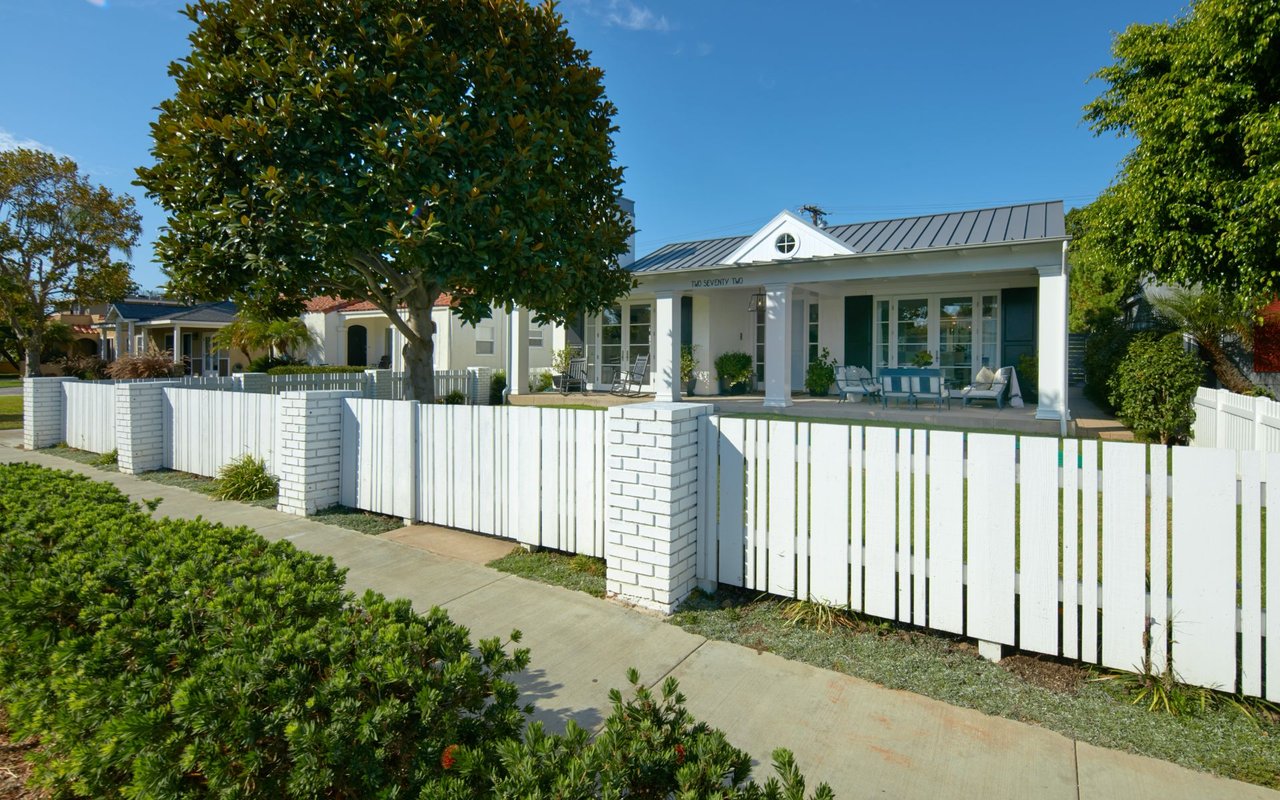
Costa Mesa occupies a distinctive position in coastal Orange County, immediately inland from Newport Beach and extending north toward the I-405 corridor. The city combines established residential neighborhoods with major arts, shopping, dining, employment, and entertainment districts, creating a more varied urban fabric than many surrounding communities.
Costa Mesa officially incorporated in 1953 after developing from a semi-rural farming community into a rapidly growing postwar city. Today, South Coast Plaza, Segerstrom Center for the Arts, the OC Fair & Event Center, Orange Coast College, and Fairview Park help define the city beyond its residential neighborhoods.
For home buyers, Costa Mesa is best understood neighborhood by neighborhood. Eastside Costa Mesa offers close proximity to Newport Beach and Upper Newport Bay. Mesa Verde is known for established single-family homes, parks, golf, and mature streets. Westside Costa Mesa combines older housing, newer infill development, creative businesses, and access to Fairview Park. College Park, Halecrest, Mesa del Mar, and South Coast Metro provide additional residential options.
Those differences make Costa Mesa much more than a single housing market.
Costa Mesa offers a broad range of residential real estate, including detached single-family homes, remodeled mid-century residences, contemporary infill construction, townhomes, condominiums, small-lot developments, and luxury homes near the Newport Beach border.
Housing values can shift considerably across a relatively short distance. A remodeled home in Eastside Costa Mesa, a larger residence near Costa Mesa Country Club, a newer property on the Westside, and a condominium near South Coast Metro may appeal to different buyers and compete in different segments.
Lot size, neighborhood, renovation quality, outdoor space, and proximity to Newport Beach can all affect value.
Micro-location is particularly important in Costa Mesa.
In Eastside, proximity to Newport Beach, Upper Newport Bay, 17th Street, parks, and established residential streets can command premiums. In Mesa Verde, lot size, golf course position, mature landscaping, cul-de-sac locations, and proximity to Fairview Park can influence value.
Westside properties may be evaluated according to redevelopment quality, walkability, lot configuration, and access to open space. In South Coast Metro, convenience to shopping, arts venues, employment centers, and regional transportation may matter more.
Condition matters too. Costa Mesa contains homes from several development periods, so an extensively renovated residence can compete very differently from a similar-sized home retaining older systems or an original floor plan.
Costa Mesa offers an interesting balance between established neighborhoods and selective newer development.
Many residential streets were built during the postwar decades and now feature mature trees, traditional lots, and remodeled or expanded homes. Infill development has also introduced contemporary detached homes, townhomes, and small-lot communities.
For buyers, newer does not automatically mean better value. Lot size, privacy, outdoor space, parking, HOA structure, neighborhood character, and location should be compared alongside the age of the residence.
Costa Mesa’s housing reflects decades of growth and reinvestment. Buyers can find mid-century ranch homes, traditional suburban residences, coastal-inspired remodels, contemporary custom homes, attached townhomes, condominiums, and newer infill properties within the same city.
Detached homes make up much of Costa Mesa’s established residential fabric.
Eastside contains everything from modest original cottages and ranch homes to substantially rebuilt contemporary properties. Mesa Verde includes traditional single-family residences, larger homes near the golf course, and extensively remodeled properties.
College Park, Halecrest, Mesa del Mar, and surrounding neighborhoods offer additional established housing, often with yards, garages, mature streetscapes, and convenient access to major roads.
Because many homes have been altered over time, buyers should look beyond the original year built. Renovation permits, electrical and plumbing updates, roofs, windows, foundations, additions, and the quality of previous construction can all affect long-term value.
Costa Mesa also contains a substantial attached-housing market.
Townhomes and condominiums range from older communities with established landscaping to contemporary developments with modern floor plans and lower-maintenance ownership. Newer projects have also introduced detached-condominium and small-lot formats that can provide private garages and outdoor space while sharing association responsibilities.
Buyers should review HOA dues, reserves, insurance obligations, parking, common-area maintenance, architectural rules, and any anticipated assessments.
Costa Mesa contains several distinct residential districts, each with its own relationship to Newport Beach, parks, commercial centers, arts, and regional transportation.
For buyers, narrowing the search to several target areas is often more useful than beginning with every home carrying a Costa Mesa address.
Eastside Costa Mesa is one of the city’s most sought-after residential areas, positioned along the Newport Beach border.
Its location gives residents convenient access to 17th Street, Upper Newport Bay, Newport Heights, Mariners Mile, beaches, restaurants, shopping, and parks without requiring a Newport Beach address.
Housing is diverse. Original cottages and ranch-style homes remain alongside major remodels, expanded residences, contemporary custom homes, townhomes, and newer infill projects. Lot configuration can vary from street to street, making neighboring properties, parking, street character, lot depth, and surrounding redevelopment important parts of the comparison.
Mesa Verde occupies western Costa Mesa and offers a more traditional suburban residential environment.
The neighborhood is known for established single-family homes, mature landscaping, parks, Costa Mesa Country Club, and convenient access to Fairview Park. Homes near the golf course may offer green views or larger lots, while interior streets range from original mid-century properties to extensively renovated residences.
Mesa Verde can be particularly appealing to buyers who want established residential streets and outdoor recreation while remaining within easy reach of Newport Beach, Huntington Beach, South Coast Metro, and I-405.
Westside Costa Mesa has evolved considerably over the past several decades.
The area includes single-family residences, apartments, townhomes, contemporary infill development, creative businesses, restaurants, breweries, design-oriented commercial spaces, and neighborhoods bordering Fairview Park.
Housing architecture is especially varied, reflecting construction from the 1940s through contemporary development. The Westside can appeal to buyers who appreciate a less uniform residential environment and want proximity to parks, cycling routes, local businesses, and the Costa Mesa-Huntington Beach edge.
College Park sits near Orange Coast College and includes established single-family streets in a central location.
Halecrest and nearby neighborhoods offer another established suburban setting with convenient access toward South Coast Metro, I-405, parks, schools, and shopping.
Mesa del Mar lies near TeWinkle Park and the OC Fair & Event Center and includes residential streets close to some of the city’s principal recreation and community facilities.
These neighborhoods may receive less attention than Eastside or Mesa Verde, but they can offer compelling combinations of lot size, mature streets, central location, and access to major Costa Mesa destinations.
Costa Mesa’s northern districts create one of the most significant cultural and commercial centers in Orange County.
South Coast Plaza, Segerstrom Center for the Arts, South Coast Repertory, Orange County Museum of Art, offices, restaurants, hotels, and other businesses are concentrated around South Coast Metro and the Theater & Arts District.
For nearby homeowners, this creates access to regional amenities that is unusual for a primarily residential Orange County city.
South Coast Plaza has helped shape northern Costa Mesa into a regional center for luxury shopping, dining, hospitality, and business.
South Coast Metro extends beyond the shopping center itself, incorporating offices, restaurants, hotels, and residential communities.
Access to I-405 and SR-55 also makes northern Costa Mesa particularly convenient for commuting.
Costa Mesa embraces its identity as the City of the Arts.
Segerstrom Center for the Arts anchors the district alongside South Coast Repertory and Orange County Museum of Art. Music, theater, dance, touring productions, and visual arts create a cultural concentration uncommon elsewhere in Orange County.
For residents, these venues help distinguish northern Costa Mesa from neighboring suburban communities.
Costa Mesa combines neighborhood parks with one especially significant natural asset: Fairview Park.
The city’s parks provide neighborhood recreation, while Fairview Park preserves a much larger open landscape along the western edge.
Fairview Park encompasses 208 acres, including 195 acres of natural open space.
The park contains multiple habitat areas, a nationally registered cultural resource historic site, and approximately seven miles of trails for walking and bicycling. It also connects toward the Santa Ana River Trail and neighboring Talbert Regional Park.
For Mesa Verde and Westside residents, proximity to this amount of open land can be a meaningful lifestyle feature.
TeWinkle Park is another major Costa Mesa recreation destination, with open green space, sports facilities, paths, water features, and community gathering areas.
The OC Fair & Event Center adds another dimension to community life. Beyond the annual fair, the property hosts concerts, educational programs, exhibitions, Centennial Farm, and events throughout the year. Buyers considering homes nearby may value convenient access while also weighing seasonal traffic and activity.
Costa Mesa is served by Newport-Mesa Unified School District, which also serves neighboring Newport Beach.
The district organizes schools into several feeder patterns, including Costa Mesa and Estancia zones. Because school boundaries do not always follow neighborhood assumptions, buyers should verify the assignment for an individual address rather than relying on a general statement about living in Costa Mesa.
Costa Mesa High School and Estancia High School serve different portions of the city, with corresponding middle and elementary school pathways.
Buyers for whom school assignment is important should use the district’s current address-based school locator before making a purchase decision.
Orange Coast College also occupies a large central campus.
Costa Mesa sits immediately inland from Newport Beach, with Huntington Beach to the west, Fountain Valley and Santa Ana to the north, and Irvine nearby to the east.
SR-55 runs through Costa Mesa toward Newport Beach and connects north to I-405, while SR-73 lies nearby. Harbor Boulevard, Newport Boulevard, Bristol Street, Fairview Road, Baker Street, Adams Avenue, and 17th Street provide major local connections.
Costa Mesa does not have an ocean shoreline, but portions of the city sit only minutes from Newport Beach.
Eastside residents can be particularly close to Newport Heights, Upper Newport Bay, Mariners Mile, and the Newport Peninsula, while Westside and Mesa Verde offer relatively direct routes toward both Newport Beach and Huntington Beach.
For buyers who want regular coastal access without requiring an oceanfront address, Costa Mesa can offer a compelling alternative.
Costa Mesa’s location near I-405, SR-55, and SR-73 provides convenient access toward Irvine, Santa Ana, Huntington Beach, Newport Beach, and other Orange County employment centers. John Wayne Airport is also nearby.
For buyers who commute regularly, neighborhood choice matters. South Coast Metro can provide easier freeway access, while Eastside prioritizes Newport Beach proximity. Westside and Mesa Verde create different routes toward Huntington Beach and northern Orange County.
Buying in Costa Mesa starts with determining which neighborhood best matches the buyer’s priorities.
Eastside may appeal to someone focused on Newport Beach proximity and 17th Street. Mesa Verde may make more sense for a buyer prioritizing established single-family streets, parks, and golf. Westside can offer a more eclectic mix of housing and creative commercial districts, while South Coast Metro prioritizes arts, employment, shopping, and regional access.
Costa Mesa’s varied housing age makes renovation history particularly important.
Buyers should review permitted additions, electrical and plumbing updates, roof age, windows, foundations, drainage, and the quality of major remodeling work.
For newer infill developments and attached housing, HOA review becomes equally important. Dues, reserves, insurance responsibilities, common maintenance, parking, architectural rules, and planned assessments should all be considered.
A newly constructed home on a smaller lot and a remodeled older home on a larger traditional parcel may serve very different buyers even when their interior square footage is similar.
An experienced Costa Mesa real estate agent should understand why values change between Eastside, Mesa Verde, Westside, College Park, Halecrest, Mesa del Mar, and South Coast Metro.
Lot size, proximity to Newport Beach, street position, renovation quality, school boundaries, nearby commercial uses, architectural character, and development patterns can all affect value.
Tim Smith Real Estate Group works throughout coastal and central Orange County and has represented properties in Costa Mesa, including Eastside homes.
Costa Mesa offers detached single-family homes, remodeled mid-century residences, contemporary custom homes, townhomes, condominiums, and newer infill development. Housing style, lot size, and density vary considerably by neighborhood.
Buyers commonly consider Eastside Costa Mesa, Mesa Verde, Westside, College Park, Halecrest, Mesa del Mar, and residential areas near South Coast Metro. Each offers a different combination of housing, parks, commercial access, and proximity to Newport Beach.
Yes. Costa Mesa directly borders Newport Beach, and Eastside Costa Mesa is especially close to Newport Heights, Upper Newport Bay, 17th Street, and other Newport Beach destinations. Other parts of Costa Mesa remain within relatively easy driving distance of the coast.
Yes. Luxury properties are found particularly in Eastside Costa Mesa and select portions of Mesa Verde, where larger lots, extensive renovations, custom construction, and proximity to Newport Beach can command significant premiums.
Start with neighborhood, lot size, property condition, renovation history, outdoor space, proximity to Newport Beach, school assignment when relevant, and access to parks, shopping, or employment centers.
For townhomes, condominiums, and newer infill communities, also compare HOA dues, insurance responsibilities, parking, reserves, and shared maintenance.
In Costa Mesa, choosing the right neighborhood can be just as important as choosing the house itself.
110,538 people live in Costa Mesa, where the median age is 36.5 and the average individual income is $56,625. Data provided by the U.S. Census Bureau.
Total Population
Median Age
Population Density Population Density This is the number of people per square mile in a neighborhood.
Average individual Income
There's plenty to do around Costa Mesa, including shopping, dining, nightlife, parks, and more. Data provided by Walk Score and Yelp.
Explore popular things to do in the area, including OC Wing Street, Wings Street, and Fruteria El Puesto.
| Name | Category | Distance | Reviews |
Ratings by
Yelp
|
|---|---|---|---|---|
| Dining | 0.41 miles | 0 reviews | 0/5 stars | |
| Dining | 0.47 miles | 0 reviews | 0/5 stars | |
| Dining | 0.71 miles | 5 reviews | 4.8/5 stars | |
| Dining | 0.82 miles | 0 reviews | 0/5 stars | |
| Dining | 0.89 miles | 14 reviews | 5/5 stars | |
| Shopping | 0.74 miles | 0 reviews | 0/5 stars | |
| Shopping | 0.89 miles | 0 reviews | 0/5 stars | |
| Active | 0.29 miles | 11 reviews | 2/5 stars | |
| Active | 0.89 miles | 0 reviews | 0/5 stars | |
| Nightlife | 0.73 miles | 3 reviews | 5/5 stars | |
| Beauty | 0.36 miles | 20 reviews | 4.7/5 stars | |
| Beauty | 0.36 miles | 0 reviews | 0/5 stars | |
| Beauty | 0.36 miles | 0 reviews | 0/5 stars | |
| Beauty | 0.39 miles | 0 reviews | 0/5 stars | |
| Beauty | 0.48 miles | 0 reviews | 0/5 stars | |
| Beauty | 0.54 miles | 0 reviews | 0/5 stars | |
| Beauty | 0.68 miles | 0 reviews | 0/5 stars | |
| Beauty | 0.68 miles | 0 reviews | 0/5 stars | |
| Beauty | 0.81 miles | 8 reviews | 2/5 stars | |
| Beauty | 0.83 miles | 0 reviews | 0/5 stars | |
| Beauty | 0.89 miles | 0 reviews | 0/5 stars | |
| Beauty | 0.89 miles | 0 reviews | 0/5 stars | |
| Beauty | 0.92 miles | 0 reviews | 0/5 stars | |
|
|
||||
|
|
||||
|
|
||||
|
|
||||
|
|
||||
|
|
Costa Mesa has 41,628 households, with an average household size of 2.6. Data provided by the U.S. Census Bureau. Here’s what the people living in Costa Mesa do for work — and how long it takes them to get there. Data provided by the U.S. Census Bureau. 110,538 people call Costa Mesa home. The population density is 6,993 and the largest age group is Data provided by the U.S. Census Bureau.
Total Population
Population Density Population Density This is the number of people per square mile in a neighborhood.
Median Age
Men vs Women
Population by Age Group
0-9 Years
10-17 Years
18-24 Years
25-64 Years
65-74 Years
75+ Years
Education Level
Total Households
Average Household Size
Average individual Income
Households with Children
With Children:
Without Children:
Marital Status
Blue vs White Collar Workers
Blue Collar:
White Collar: