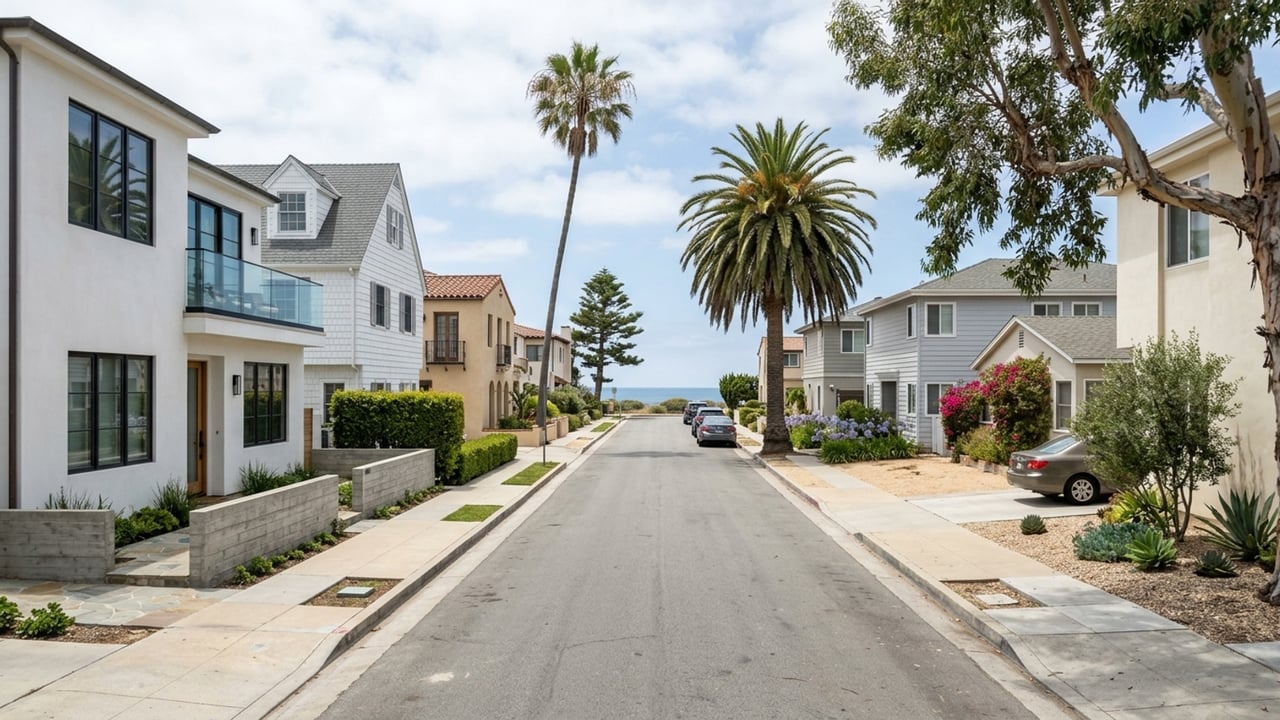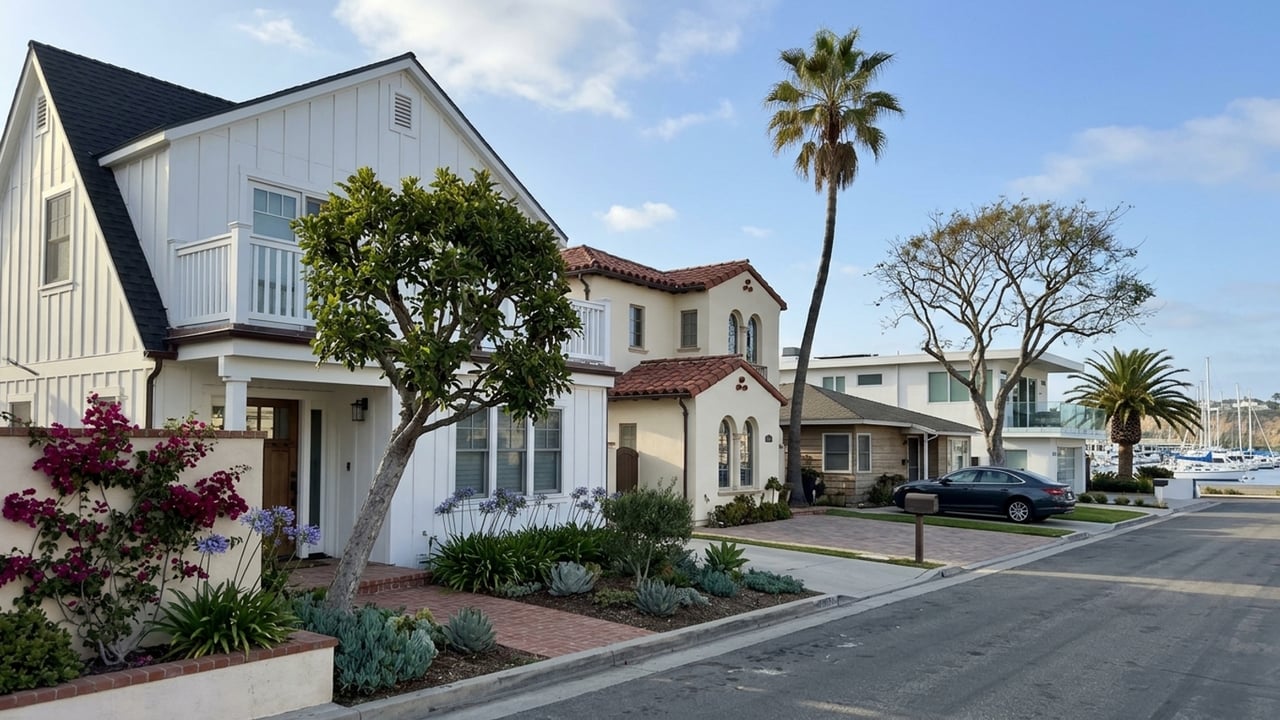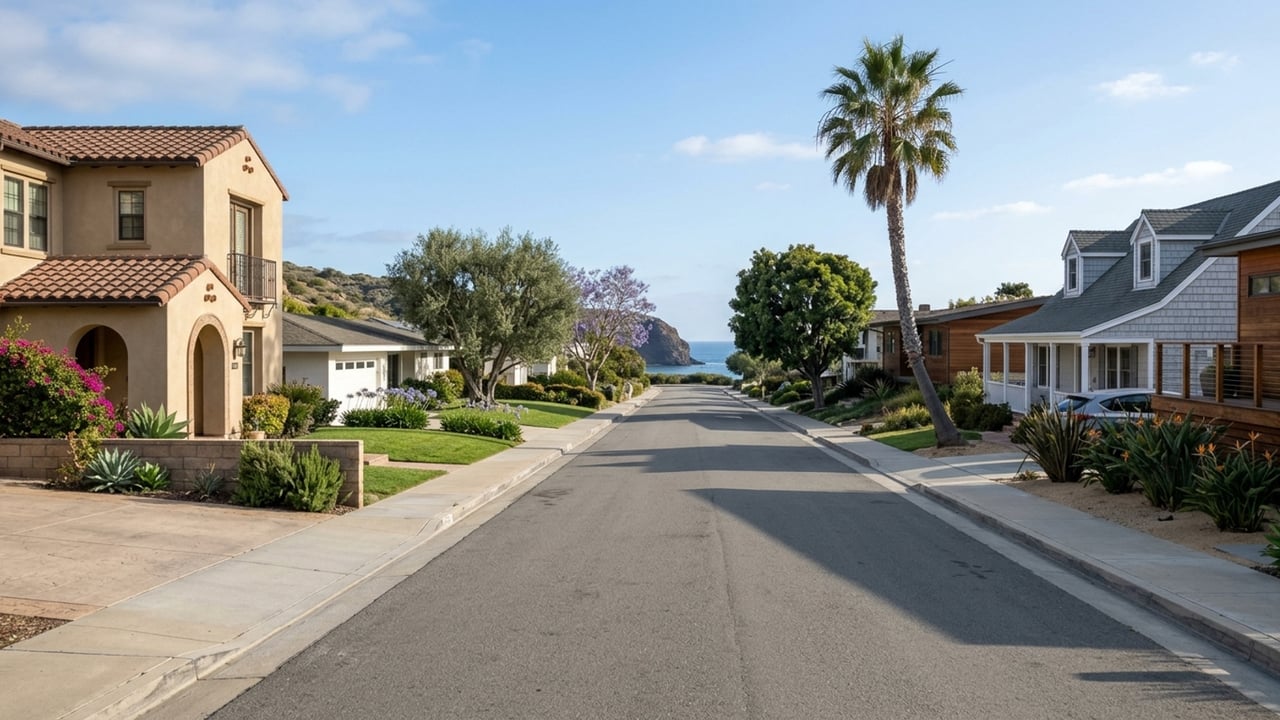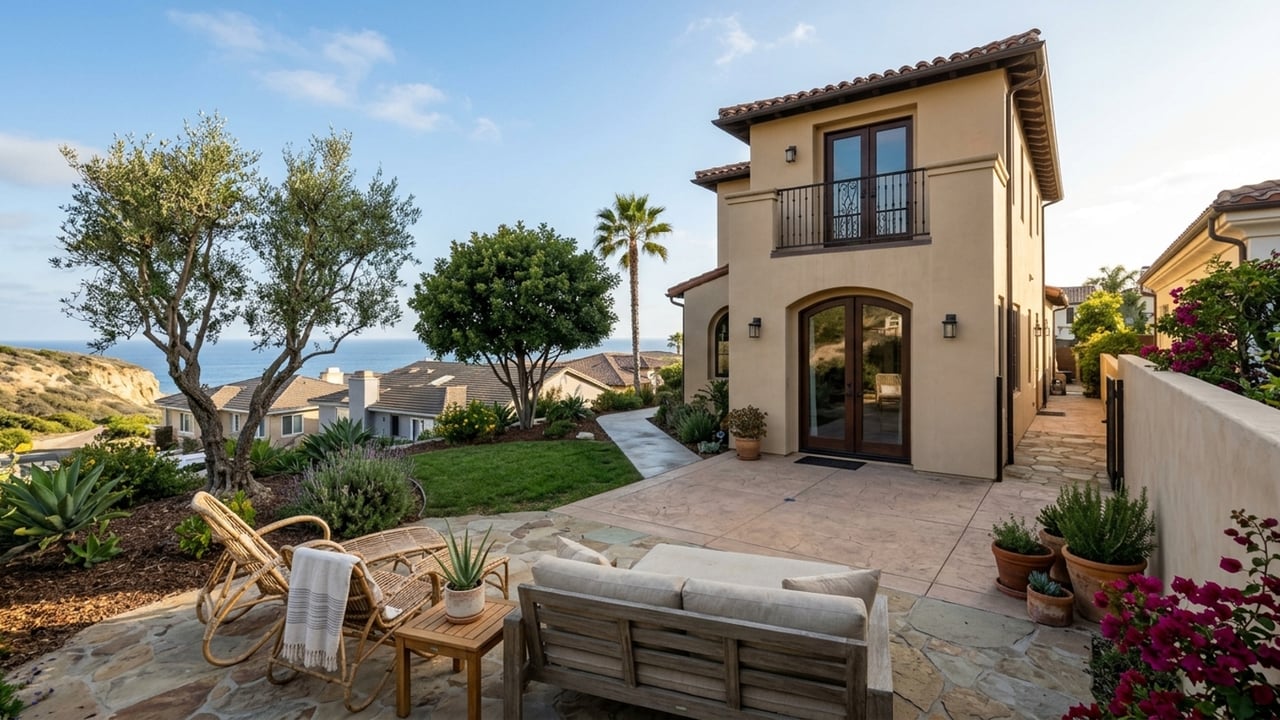
In Dana Point, staging is worth exactly what it can recover of the list-to-sale price gap.
Key takeaway
For most Dana Point houses, professional staging is worth pricing out. The median single-family sale in the 90 days ending September 30, 2026, closed below asking, and presentation is one of the few levers you can pull on that gap. Condos already sell much closer to list, so a stager consultation and a DIY plan usually make more sense for those units.
Who this guide is for
You are preparing to list a Dana Point house or condo and deciding whether full professional staging, a DIY plan, or virtual staging is worth the cost.
Does home staging pay off in Dana Point?
Staging is a bet on closing part of the gap between list and sale price, and that gap is a different size for houses than for condos. Recent Dana Point market trends show a 47-day median on market and 3.4 months of supply across all homes. That gives buyers time to compare your listing against competing ones in photos and on tours.
Closing the price gap for single-family houses
The median single-family house in Dana Point closed at 97.9% of its asking price. On a $2,421,535 median, that's a gap of roughly $51,000. A staging budget is a small share of that difference, which is why it's worth pricing out. The honest caveat is that the gap comes from pricing, condition, and timing as much as from presentation. Judge whether presentation can plausibly narrow it for your specific house.
Why staging goals differ for condos
In the 90 days ending September 30, 2026, condos closed at 99.2% of list price, and nearly a third sold above asking, so the gap staging could recover is small. The realistic goal is standing out from near-identical floor plans in the same complex. A bare unit can lose a side-by-side comparison with a matching staged unit in your building. That points toward a consultation or targeted pieces rather than a full package.
The limits of presentation
Staging helps a home make a buyer's shortlist. It helps photos show scale and flow, and it shows buyers how to use awkward spaces or open floor plans. It doesn't fix deferred maintenance or recover a discount that comes from pricing above recent comparable sales. Sellers sometimes spend on staging to avoid a repair buyers will find at inspection anyway.
How to choose your staging approach
Four questions sort out what you need:
- Property type: If you're selling a single-family house, start with 'Closing the price gap for single-family houses.' For a condo, start with 'Why staging goals differ for condos.'
- Occupancy: If the home will be vacant during showings, read 'Pricing full staging for vacant homes,' 'Setting up an empty property' and 'Using virtual staging on a budget.' If you'll live there, read 'Costs for occupied and partial staging' and 'Living in a staged property.'
- Rental budget: If you can pay for furniture rental over a listing that runs two months or longer, see 'When to pay for professional inventory.' If not, see 'When you can handle the work yourself' and 'Consultation fees and DIY plans.'
- Hard-to-read rooms: If buyers may struggle with an odd layout, an empty bonus room, or dated finishes, go to the room-by-room priorities and 'The limits of presentation.'
Typical home staging costs in Dana Point
Costs depend on how much furniture you rent and for how long. Most contracts include an upfront design and installation fee plus a monthly rental charge. With a 50-day median time on market for single-family houses, budget for at least two months of rental inventory.
Pricing full staging for vacant homes
Industry pricing guides for Orange County in 2026 show vacant home staging typically runs about $2,500 to $7,500 or more for the first 30 days, covering full furniture rental for an empty property. If the listing stays staged past day 30, the monthly fee runs roughly $500 to $1,500.
Costs for occupied and partial staging
In occupied staging, a professional edits and repositions your existing furniture and brings in select accent pieces. It typically costs $500 to $2,500, usually as a one-time fee. Partial staging of specific rooms like the living room and primary suite runs about $1,500 to $4,000. The stager's plan may also ask you to remove or store a significant amount of what you own, so add storage costs to the budget.
Consultation fees and DIY plans
A walk-through consultation delivers a written room-by-room plan you carry out yourself, which suits condos and well-furnished occupied homes. Some Orange County staging companies offer in-home consultations free, but a standalone written staging plan runs $250 to double that. Other firms cite an initial consultation fee of $150 to $600. The trade for the lower cost is that the furniture moving and execution fall entirely on you.
Comparing staging costs to local sale prices
At Dana Point prices, one percentage point of the sale price on a median single-family house is worth about $24,200. On the condo median, it's roughly $13,800. The same staging bill reads very differently depending on which you're selling. That's an illustration, not a guarantee: no source can promise staging will add a specific percentage to your sale.
Hiring a professional stager vs. doing it yourself
A full-service firm handles design, furniture delivery, and removal. Doing it yourself saves money but takes a good eye for what buyers expect at this price tier. It also takes an honest look at your furniture and available time.
When to pay for professional inventory
Professional staging makes the most sense for a vacant house, an awkward layout, or a seller who lives out of the area. It also makes sense when your furniture is worn or too personal for listing photos. You pay for rented inventory by the month, so a listing that sits keeps adding to the bill.
When you can handle the work yourself
A DIY approach works for occupied condos and homes with neutral, good-condition furniture. The core tasks are deep cleaning, decluttering, depersonalizing, and adding light, neutral linens. Without an outside eye, it's easy to leave too much furniture in each room. That's the most common self-staging mistake, and it's harder to see when it's your own stuff.
Questions to ask a prospective stager
Ask for a portfolio of listing photos rather than stylized design shoots, so you can see how their work translates online. Ask for a certificate of liability insurance and their damage policy covering both your home and their inventory. Get the minimum rental term, the monthly extension rate, and the guaranteed removal date in writing. Online reviews rate the service experience, not sale outcomes, so a five-star stager can still be the wrong fit for a coastal contemporary home.
Handling occupied, vacant, and virtual staging
Buyers struggle to picture themselves in empty rooms, while cluttered rooms make a home feel small, and the two problems need different solutions.
Living in a staged property
Short-notice showings mean a showing-ready reset every day the listing is active. Store daily-use items out of sight, and keep pets and valuables out of the house during tours. It's manageable, but tiring.
Setting up an empty property
Empty rooms photograph smaller and give buyers no sense of scale. Furniture sets the room size and shows how to use the space. Condo sellers should confirm HOA rules on deliveries and elevator reservations before booking. Also ask your homeowners insurance carrier how long the home can sit vacant before coverage terms change.
Using virtual staging on a budget
Virtual staging uses software to add digital furniture to photos of empty rooms. AI-based tools run roughly $0.10 to $3 per photo; human-edited designer services typically cost about $16 to $50 per photo. It works for vacant listings on a tight budget, ideally with a few real pieces left in the home so in-person showings match the photos. California requires digitally altered real estate listing photos to be disclosed, so confirm with your listing agent that virtually staged photos carry the required disclosure. That makes virtual staging a marketing aid rather than a substitute for physical staging.
Where to focus your staging budget
Spend first on the spaces where buyers will spend the most time or entertain. Secondary bedrooms and small utility spaces can often get by with a deep clean and fresh paint.
First impressions and exterior details
The entry and curb appeal form the first photo and the buyer's first impression. Focus on the front door, exterior lighting, potted plants, and house numbers. In Dana Point, salt air wears down paint and hardware faster than most markets, so touch up accordingly. Condo owners usually can't change exteriors or common areas, so check with the HOA before buying planters or swapping fixtures.
Maximizing living rooms and ocean views
Arrange furniture to face the view or main window, clean the glass, and open all window coverings. Define each zone so buyers understand the flow of the room. At a median of about $1,183 per square foot for Dana Point houses, every room buyers can't picture using costs you money. Photos that frame an ocean glimpse as a panorama set up disappointment at the showing, so stage the view you have.
Clearing out kitchens and bathrooms
Kitchens and bathrooms need clear counters, fresh towels, and simple accents. Update light bulbs, swap out cheap hardware, and remove all personal products from showers and vanities. Staging cannot hide dated cabinets or worn grout from buyers at this price point, so decide on any minor fixes before the stager arrives.
Setting up patios and balconies
Patios, decks, and balconies are a significant part of the coastal pitch in Dana Point. A simple seating group shows buyers how the outdoor space functions. Clean surfaces and working exterior lighting make evening showings more appealing. Outdoor furniture is often priced separately in staging contracts and has to hold up against wind and sun. Confirm whether it's included and who covers damage before you sign.
Preparing your home for the market
Complete all repairs and painting first, then bring in the stager. Schedule listing photos once the home is fully arranged, and list after that. To fit staging into the full seller process in Dana Point, book the stager once your repair dates are set. If you want to talk through how your specific home compares to recent sales, reach out to connect with a listing agent who can help you weigh your options. Staging is just one phase; the full process of selling a home in Dana Point requires coordinating multiple steps.
At a glance
- Single-family median sale price: $2,421,535, up 21.1% year over year (69 sales, 90 days ending Sept. 30, 2026)
- Single-family sale-to-list ratio: 97.9%; 26.5% sold above list (90 days ending Sept. 30, 2026)
- Single-family median days on market: 50; months of supply: 3.2; median price per square foot: $1,183 (90 days ending Sept. 30, 2026)
- Condo median sale price: $1,384,858, up 24.9% year over year (36 sales, 90 days ending Sept. 30, 2026)
- Condo sale-to-list ratio: 99.2%; 31.4% sold above list; median days on market: 44 (90 days ending Sept. 30, 2026)
- Condo months of supply: 3.6; median price per square foot: $1,065 (90 days ending Sept. 30, 2026)
- All homes: median sale price $2,099,000 across 113 sales; 98.3% sale-to-list; 47 median days on market; 3.4 months of supply; 126 homes for sale (90 days ending Sept. 30, 2026)
Dana Point home staging FAQs
Does home staging improve sales?
Per NAR's 2025 Profile of Home Staging, 29% of surveyed REALTORS® said staging led to a 1% to 10% increase in the dollar value buyers offered. Also, 49% of sellers' agents said it reduced time on market, and 17% of buyers' agents reported a 1% to 5% increase in offer value versus similar unstaged homes. These are agent survey results, not a controlled study.
How long before listing should I book a home stager?
Ask stagers for their current lead time and how many days installation takes, then work back from your listing photo date.
Is a home stager the same as an interior designer?
No. A stager rents inventory short-term to market a home to the widest pool of buyers, while a designer creates a permanent space for the owner, so confirm the firm offers staging rental inventory.
Who pays for home staging, the seller or the listing agent?
The seller typically pays, though some listing agreements include a consultation or a contribution toward staging. Get any contribution written into the listing agreement before signing.
Can home staging costs be deducted when I sell?
Per IRS Publication 523, the amount realized on a sale is the selling price minus selling expenses, which are costs directly associated with selling the home. Ask a tax professional whether your staging costs count as selling expenses.
Should I remodel or just stage before selling in Dana Point?
In the 2025 Cost vs. Value Report, a midrange bath remodel in the Pacific region recouped 91% of its $27,710 cost, while an upscale primary suite addition recouped only 18.6% of its $390,895 cost. Before committing to a permanent renovation, ask your listing agent how comparable recent sales were presented.
Do I need HOA approval to stage a Dana Point condo?
Staging inside a unit rarely needs approval. Deliveries, elevator use, common-area décor, and lockboxes typically fall under HOA rules, so request the current rules from the management company before booking the installation.